While a warehouse improvement project like a new site startup or automation addition offers significant opportunities, many fail to ask the right questions before jumping in. Failure to ask questions can cause these projects to quickly spiral out of control or fail to deliver intended benefits. When that happens, you’ll be asking one question for sure: What happened?
Before you jump into your next major initiative, make sure you're ready by asking (and answering) these ten critical questions.
“Asking questions isn’t a sign of weakness; it’s a sign of wisdom” – Craig Groeschel

Modern Warehouse Interior
1. What Specific Problem Are We Trying to Solve?
Now more than ever, it’s easy to get lured away by the shiny objects you see at trade shows like ProMat or Modex. We all want a robot, but a robot may not be what your warehouse needs. This might seem obvious, but you'd be surprised at how often people skip the step of figuring out the problem they're trying to solve.
Identify exactly what's holding your operation back and what's needed to elevate it to the next level. “We need more capacity” isn’t clear enough. Are you facing high labor costs, poor inventory accuracy, or sluggish order fulfillment? Are you undergoing a network transformation? Or perhaps you're looking to increase throughput, enhance customer experience, or increase distribution operations resilience? Clearly defining both your current barriers and future ambitions ensures your solutions don’t just fix problems, they actively propel your business forward.
Resource: "Start with Why" TED Talk – Simon Sinek
"People don't buy what you do; they buy why you do it."
Understanding your core purpose can sharpen your approach to identifying the specific problems your warehouse improvement project should solve and unify the team around the solution.
2. Do We Have a Unified Vision for This Warehouse Improvement Project?
Everyone, from executives to frontline employees, needs to understand why the project matters and what success looks like. Ideally, you have commitment, not just compliance. Regularly check alignment to ensure everyone's pulling in the same direction. Without alignment, your project risks drifting, causing confusion and delays.
And talking about it isn’t enough! Avoid a false sense of alignment by having specific documented vision, goals, and objectives for the project.
Resource: "The Five Dysfunctions of a Team" – Patrick Lencioni
"If you could get all the people in an organization rowing in the same direction, you could dominate any industry." – Patrick Lencioni
This book highlights the importance of trust, commitment, and shared goals, which are essential for aligning your team around a unified project vision.
3. How Will This Warehouse Project Align with Our Long-Term Strategy?
Warehouse projects aren’t only about solving today’s problems; they’re about shaping tomorrow’s capabilities. That’s why it’s worth stepping back to ask: what will our internal customers need from us in five years? Ten?
Technology is changing the game. Generative AI is already reshaping roles across supply chains. Amazon CEO Andy Jassy recently told employees, “We will need fewer people doing some of the jobs that are being done today, and more people doing other types of jobs.” That’s not a distant future. It’s what is unfolding right now.
Your project should reflect where your business is headed, not just today’s pain points. That might mean investing in flexibility, automation, or upskilling, not because it pays off immediately but because it keeps you competitive in a rapidly changing landscape. It’s worth questioning the expected and safe 2-3 year payback horizon for transformational projects. Successful companies in difficult industries tend to plan over the long-term.
Resource: The DHL Logistics Trends Radar 7.0
DHL’s Logistics Trend Radar is a strategic foresight tool that maps emerging social, business, and technology trends likely to impact the logistics industry over the next 5–10 years.
4. Who Are the Key Stakeholders, and How Will We Engage Them?
Think beyond the org chart. Look for the people whose support, expertise, or day-to-day work will influence outcomes. This could include operations leaders, warehouse staff, IT partners, HR teams, and—yes—finance. (If your finance lead likes donuts, this is the time to find out.) Even when the budget lives in your domain, finance plays a pivotal role in shaping ROI expectations and ensuring fiscal alignment.
Once you've identified stakeholders, build an intentional engagement plan.
Ask: How do we want them involved? What do they need to know, and when? What input do they give, and when? When people feel included early, they’re more likely to champion the change, not resist it. Key project research shows that a stakeholder engagement plan can avoid major project problems and improve payback.
Resource: Leading Change – John Kotter
“Major change is never successful unless the complacency level is low and the urgency level is high.” – John Kotter
Kotter’s model highlights the importance of identifying key allies and giving them ownership. It’s a great framework to help you think beyond communication plans and toward true stakeholder mobilization.
5. What Hidden Costs Might We Encounter?
Nine out of ten large-scale projects go over budget, miss their deadlines, or fail to deliver promised benefits. No one likes surprises, especially expensive ones. Look beyond initial equipment prices and consider hidden costs such as systems integration, training, infrastructure upgrades, ramp-up time, and ongoing maintenance (oh yes, and overall risk!). A detailed budget that considers these factors ensures your project stays financially viable from start to finish.
Resource: How Big Things Get Done by Bent Flyvbjerg and Dan Gardner
Flyvbjerg’s research reveals why so many projects go off track and offers practical insights on building realistic plans with budgets and schedules that anticipate the unexpected.
6. Do We Have the Right Team and Skill Sets in Place?
Even the best plan will stall if you don’t have the right people to execute it. That’s where many organizations run into trouble. Your operations lead is already juggling a dozen priorities. Your IT team has a backlog. And if you don’t have a dedicated Project Management Office (PMO), who will coordinate the details?
This is where a partner like PL Programs becomes invaluable. Most mid-sized companies lack a fully developed PMO or a team of warehouse experts ready to deploy. We embed with your team, bring PMO-level discipline without the red tape, and coordinate across vendors, systems, and teams to drive real execution. From site launches to automation projects, we’ve led the work from inside the four walls.
Success starts with the right team. If you don’t have it internally, build it intentionally.
Resource: Good to Great – Jim Collins
“Get the right people on the bus, the wrong people off the bus, and the right people in the right seats.” – Jim Collins
This principle from Collins highlights the importance of team composition. If you're launching a complex warehouse initiative, having the right mix of expertise and PM discipline is foundational to the project’s success.
7. Have We Thoroughly Assessed Project Risks?
Every warehouse project carries risk. While most teams engage in some form of risk planning, it often remains at a surface level. Real risk management means digging deeper. That’s why the right mix of experience matters.
Someone who has both run distribution centers and delivered complex projects knows where the landmines are and how to avoid them. Whether it's uncovering blind spots in integration or pressure-testing your staffing model, proactive risk assessment keeps your project on track when reality hits. Our team at PL Programs combines warehouse leadership experience with project-tested methodologies to identify hidden risks early and develop practical mitigation strategies that withstand pressure.
Resource: Extreme Ownership TED Talk - Jocko Willink
"Take ownership of your problems, and then take ownership of the solutions that will get those problems solved." – Jocko Willink
Willink’s principle of taking full responsibility translates directly to risk management and the value of anticipating what could go wrong, owning it early, and taking action to prevent it.
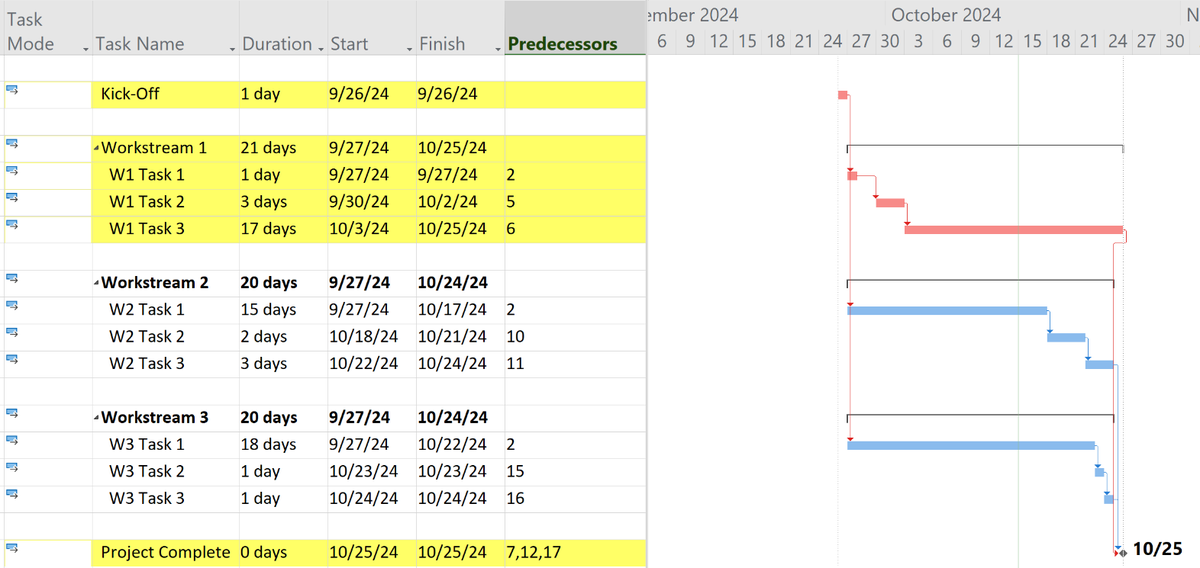
Watch Out for Variability Risk In Nominal Schedule Plans
8. What Does Effective Governance Look Like for This Project?
Project governance might sound tedious or like the 'fun police,' but without transparent decision-making processes, projects lose momentum. Like the iconic line from A Few Good Men, someone needs to be on the wall, watching for risks, enforcing accountability, and making sure the mission stays on track.
Too many warehouse projects lose momentum because decision-making isn't clear. Decisions get delayed, priorities shift, and progress comes to a halt. Define early who owns what, how decisions get made, how project status is delivered, and how progress will be reviewed. A clear governance and controls structure is your best defense against drift, indecision, and surprises no one saw coming.
Resource: Turn the Ship Around! – L. David Marquet
"Control is about making decisions concerning not only how we are going to work but also toward what end."
In this leadership classic, Marquet demonstrates how pushing decision-making authority closer to the frontlines while maintaining accountability can significantly enhance performance and alignment.
9. How Will We Ensure Staff Are Ready for the Transition?
A warehouse improvement project can fall flat if the people using it aren’t ready or, worse, feel like it’s being forced on them. Change isn’t just a logistical challenge; it’s an emotional one.
Your job is to guide them through it, not drag them across the finish line.
The key is involvement. When employees feel like they’re part of the change rather than just a product of it, they’re more likely to engage. Build a plan that goes beyond training dates and user guides.
Involve frontline teams early, communicate clearly and frequently, and create a psychologically safe environment where it is comfortable to ask questions, speak up, and provide feedback. Develop an intentional plan to inform, train, upskill, and sustain in the new landscape.
Resource: “Building Bridges and Removing Barriers: A Leader’s Role in Facilitating Change” by Michael Huff
“When employees feel they are being heard and valued, their opinion of the change will shift from being impacted by the change to being someone who is responsible for making the change successful.”
This piece outlines how leaders can reduce resistance and increase readiness by involving employees early, allowing time for processing, and providing clarity on what will and won’t change.
10. What Metrics Will Define Project Success?
Let's go back to question number 1. What problem are we trying to solve?
It’s essential to begin with the end in mind. Was it labor cost? Throughput? Inventory accuracy? If you don’t define success clearly, you’ll never know if you hit the target.
Choose 3–5 meaningful metrics that reflect both the business impact and operational performance. That might include return-on-investment, throughput, or granular metrics like order cycle time, cost per unit, employee productivity, or system uptime. Set baselines, define targets, and make them visible. When success is clearly defined and consistently tracked, it aligns effort, boosts morale, and provides the proof points you need to justify future investment.
Resource: The 4 Disciplines of Execution by Chris McChesney, Sean Covey, and Jim Huling
“People play differently when they are keeping score.”
This book emphasizes the importance of clear goals, lead and lag measures, and visible scoreboards for keeping teams engaged and accountable during long, complex projects.
Confidence Begins with Clarity
At PL Programs, we partner with warehouses to tackle these questions head-on, guiding your warehouse improvement projects from vision to reality.
We don’t just advise, we embed, execute, and deliver. With extensive experience in warehouse operations and project leadership, we help you move forward with confidence on warehouse improvement projects.
Ready to elevate your warehouse operations? Reach out to PL Programs today, and let’s get started.
Case Study: Automated Beverage Warehouse
Warehouse Improvement Case Study: RailCo