Artificial-intelligence (AI)-driven Smart Cycle Counting is an improvement in Warehouse Management System (WMS) inventory management automation that will drive labor cost savings and improve inventory accuracy. It's not here yet, but you should be looking for it. Here's why.
What Is Cycle Counting?
Cycle Counting is a process of going to the locations in a warehouse and checking the physical inventory against the systematic inventory record.
At an operator level, this involves generating a list of locations to be cycle counted, moving to each location, verifying the location, then inputting the SKU/quantity information into the system. The system checks whether the physical inputs match the system records. If everything matches, the location (or "bin") is good. The operator will go to each location on the list and check it.
Cycle Counting is usually conducted by Inventory Control departments with employees dedicated to counting, completing adjustments, and fixing inventory problems.

Cycle Counting is a critical warehouse activity
Handling Inventory Discrepancies
What happens if the physical and virtual records do not match?
If there is a discrepancy, the system logs the discrepancy and files it for follow-up in an exceptions queue. Then additional cycle counters or supervisors may be sent to the location to verify the count. If an inventory adjustement is required, the counter or supervisor (or sometimes system) may make an adjustment to inventory. An adjustment can be an addition or subtraction of inventory from the building records, which impacts the site inventory records and business financials.
Sites may have different authorization levels for different sizes of adjustments. This ensures the right level of visibility and accountability to different levels of impact on the business. For example, an adjustment with value of $5 is not very much. This might be an automatic adjustment. But an adjustment with value of $100,000 could require approval from the site manager or Vice President, and would ensure that all proper procedures are followed to account for inventory.
What Cycle Counting Is Used For
Cycle counting has several purposes.
Cycle counts can correct inventory in locations. They make sure that inventory records in the checked locations are accurate. Over time, this can improve inventory accuracy in the building and correct errors made by other processes.
Cycle counting provides sampling data on the building inventory accuracy. This means that management can reasonably know, within a certain confidence interval, how accurate their inventory is. In turn, this gives confidence to the business and auditors about the value of inventory on the books. Cycle counting can be conducted at regular intervals in lieu of wall-to-wall physical inventory counts to establish inventory accuracy.
However, both of these items have shortcomings.
Correcting inventory only works if the cycle counters can "clean" more errors than are generated in a given period of time. Cycle counters are usually only 3-8% of a site's labor force. Pickers might be 40-60%. Putaway and Replen might be another 20-30%. Errors made by those departments can easily outpace Cycle Counting cleaning if the site is not careful. Then tremendous amounts of Inventory labor must be expended to bring the building back into spec.
Sampling data on accuracy is a very important function of cycle counting. It is actually the primary function of cycle counting because it is the only leading indicator of inventory health (and hence order accuracy, other metrics) for the building.
The final benefit of cycle counting is that the data it generates can be used to diagnose process defects. That is, if the site researches the defective records and finds that certain items or processes are causing problems, the site can then do process improvement and eliminate the problems.
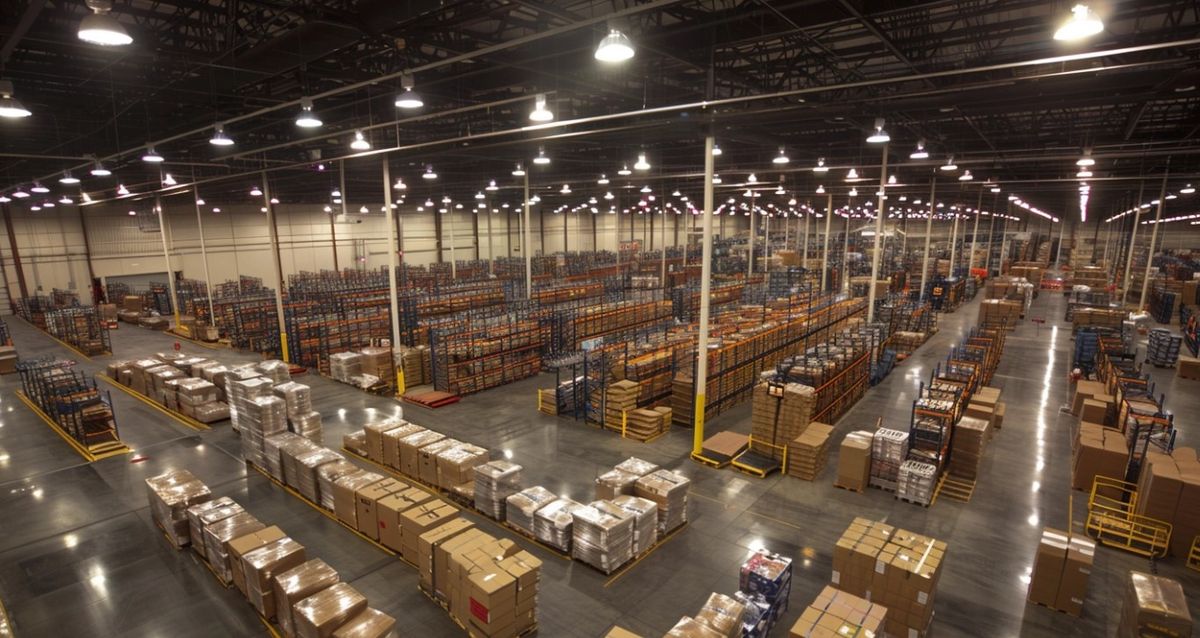
How Cycle Counting Planning Drives Inventory Labor
It's well known that there is a cost to poor quality in warehouse operations. That cost is labor cost of rework. One component of rework labor cost is the effort to complete cycle counts.
Each system and site may generate lists of cycle counts in different ways. Common ways to generate lists of locations to count include inputs of location ranges, patterns of location ranges, SKUs, A/B/C inventory velocity, or location type.
Sites might also generate lists of counts based on discrepancies. Examples would include bins where pick shorts or other andons were recorded.
Then associates go and count the bins.
For sampling counts, the only important things about the lists are that the locations are random and in high enough quantity to be a statistically valid sample for the expected accuracy. More counts are required to verify higher levels of accuracy, and fewer counts are required at lower levels of accuracy.
But for cleaning counts, lists generation drives the amount of labor required to clean defects. Here's why. A list of random bins will be as accurate as the building inventory. If the site is 99% accurate, a "cleaning" Inventory employee will only find a discrepant record at a rate of 1 in every 100 records. This means that 99% of the records are wasted, so far as cleaning is considered. And 99% of that record-checking labor is wasted.
So if the site could generate a list where 30% of the records were defective, if it somehow knew where problems were more likely, then the Inventory employee will spend 30% of time productively, and only 60% wasted.
Imagine a site with 40 Inventory employees counting to clean between weekly sampling counts. Moving from 1% productivity to 30% productivity would be a huge amount of savings! It would enable a site with 40 employees to shift to 2 employees and generate the same number of cleaned defects. Wow!
Clearly the numbers for each site will vary but the principle should be clear. This would be a significant shift out of indirect labor cost.
How can error-rich bin lists be generated?
If done manually, such bins might be generated by input from pick short locations, or ranges of locations (such as bottom levels of library bins) where employees have noticed problems, or for specific SKUs that have had problems. This is time-intensive and requires analysis, observation, and intuition about where the problems might be. Anecdotally, we've seen sites generate bin lists with up to 12% or 14% error rates by human application.
And this takes us to AI and Smart Cycle Counting.
What Should Be In Smart Cycle Counting Systems
A Smart Cycle Counting system would be a system that looks for patterns in data to predict which bins will have errors in them. It would use that prediction to generate cycle count lists and send counters to check the bins.
What would be included by such a system? First, as an AI (or Machine Learning system) is set up, it needs a lot of data. Such a system could match cycle count records with receiving transactions, putaway transactions, item master data, bin configuration, user transaction data (picks, puts, moves, etc), user location data, pick shorts, employee feedback records, order throughput, and even maintenance-related events. It would be able to determine bins most likely to have defects based on the SKU, bin type, transactions in the bin, or even non-obvious things like which employees were in the vicinity of which bins at which time.
This type of massive data analysis would certainly generate better defect rates than manual analysis.
To our knowledge, no WMS systems are offering this yet. But they should and probably will very soon. If you know of one, let us know!

Results of Smart Cycle Counting
It is not clear, without doing it, what results the AI Smart Counter would generate. But I would not be surprised to see predictive bin defect rates north of 25%, 30% or even 50% in some cases when all information was accounted for.
Of course it could not be perfect. But it would enable warehouses to dramatically reduce the number of staff dedicated full-time to bin cleaning.
Sites would have to keep employees cross-trained in cycle counting for "surge" capacity during busy seasons, and have enough staffed to do sampling counts. But huge Inventory departments to fix problems could be a thing of the past.
Drawbacks
Cycle counting is a form of rework; it is better to avoid having bin defects in the first place than to spend time fixing them, however efficiently.
So a downside of Smart Cycle Counting is that the AI might know where the defects are likely to be, but it might not be able to say *why* the defects will be there.
That's not the way neural-network AI systems works; these types of systems' results are very difficult or impossible to reverse-engineer. They takes inputs and gives outputs based on complex multi-dimensional regressions and feedback layers. So the operations teams might not be able to gain specific lessons on why certain bins are likely to be defective. They would lose the opportunity to improve processes based on the cause of the defects. Unless, of course, the AI can also be taught to give a reason (or weighting of reasons) behind its guesses for each bin.
This drawback can be overcome by the Operations team focusing on developing a process-focused quality program. They can complete research on defects to determine their likely cause and by conducting audits on their processes. These are manual activities but will provide valuable insights into what will drive lasting process improvement.
What To Do Next
This type of technology should be built into high-functioning WMS systems as soon as practicable. It will result in much efficient use of inventory labor in warehouse operations. In large sites, this could represent estimated savings of 3-8% (depending on overall number of hours in inventory counting) of overall site labor budget.
Operations leaders should be asking for this type of technology when reviewing and selecting a WMS. At the very least, the ability to input custom lists of bins for counting should be included in the WMS specification.
They should also keep in mind that the technology will not address the root causes of the inventory defects. Operations leaders must still track the number of defects cleaned, research the types, do the pareto charts and fishbone diagrams, and solve the underlying process issues. Otherwise, the cleaning process will become more efficient, but the operation will still be left with defect-generating processes and behaviors.
We welcome inquiries into how to architect and implement this type of technology, as well as warehouse implementation and automation projects in general. Book a quick meeting and let's talk!